
Cart is empty
More Than an Online Store — Money Counting Experts Since 1997
Professional Money Counters, Currency Discriminators & Coin Counters — Sales, Service & Support Nationwide USA
Service Support
-
04/29/2024Billcon DL-2000 Cleaning Sensors recommended
-
10/18/2023Error messages that may appear on the Billcon DL-2000 Currency Discriminator Counter:
-
10/18/2023Maintenance for Lidix ML series Currency Discriminator Counters
-
10/03/2022Lidex ML-1V How to clean Stacker Error in Lidix Discriminator Counters
-
07/14/2022Billcon DL-2000 or Cassida Zues Error Clean Stacker Sensor
-
05/06/2022Check Encoder Ribbon Test Maverick Micr Ribbon Testing Video
-
11/18/2021Lidix Ml Series Cleaning Scanner
-
08/30/2021Magner 75 Error SCE 1 or SCE 2
-
07/30/2021Maverick MX 300 Ribbon Replacement
-
03/24/2021Lidix Stacker Sensor Error
-
03/24/2021Lidix Stacker Sensor Error
-
03/24/2021Billcon D-551 Clear Jam and Error 73 Discriminator Counter
Professional Advice: How to Choose the Right Banknote Counter or Currency Counters
12/02/2025
Professional Advice: How to Choose the Right Currency Counter
Choosing the right currency counter is essential for any organization that manages frequent or high-volume cash transactions. The ideal machine not only speeds up counting—it enhances accuracy, reduces labor, strengthens security, and streamlines operational efficiency. To help you make an informed purchase, here is expert guidance on the key factors, benefits, and technical considerations that matter most.
1. Match the Machine to Your Cash Volume & Workflow
Selecting a counter begins with understanding your daily cash handling:
-
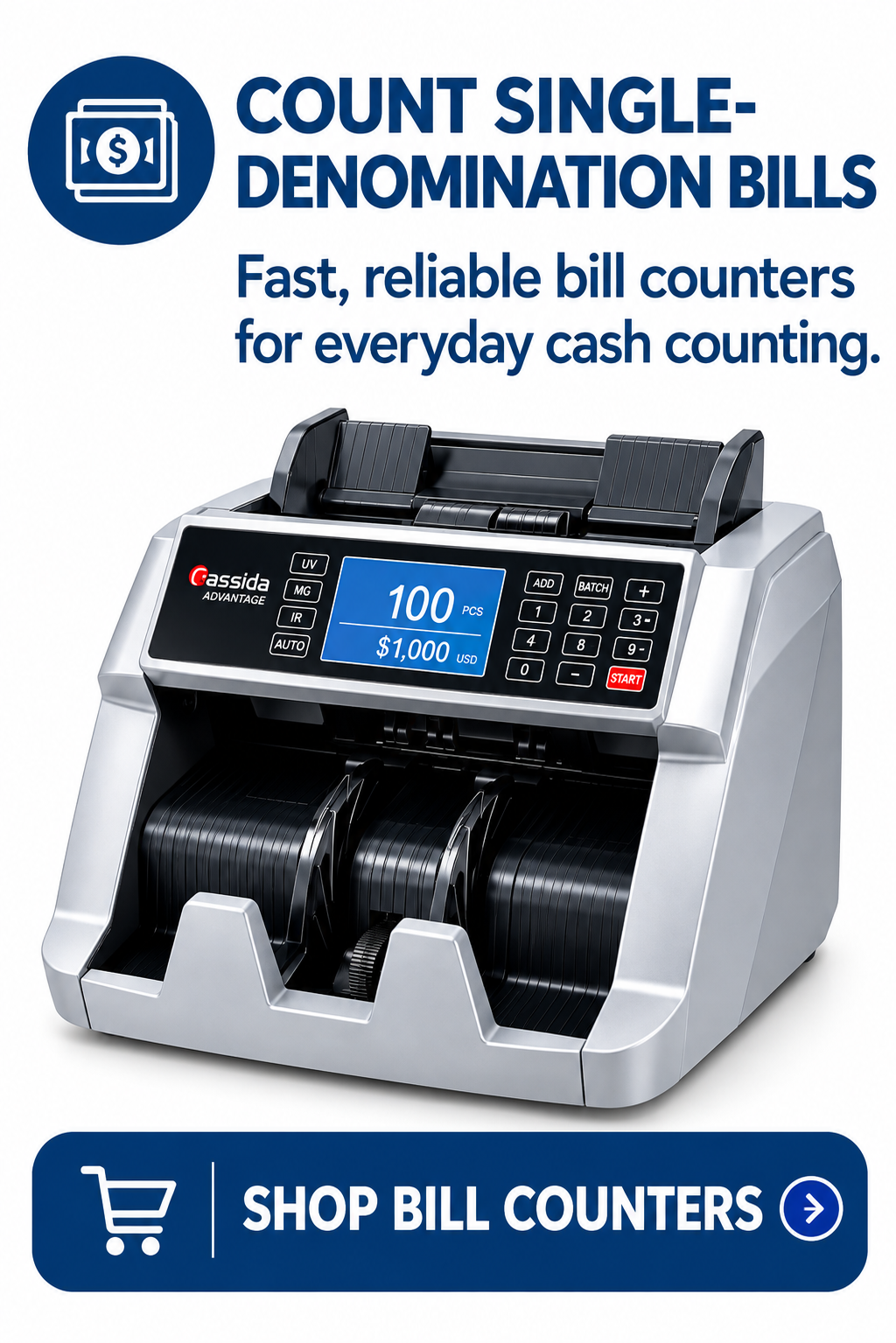
Low to Medium Volume (Retail Shops, Clinics, Small Offices)
A basic friction counter is usually enough. These compact models offer fast note counting with essential features such as Add and Batch modes. Their lightweight design also makes them convenient for mobile or shared workspaces. -
High Volume (Banks, Casinos, Large Retail Chains, Currency Exchange)
Heavy-duty, top-loading machines are engineered for continuous operation. Look for high speeds (1,200+ notes/min), large hopper capacity (600+ notes), and reliable feeding systems that minimize jams during long shifts. -
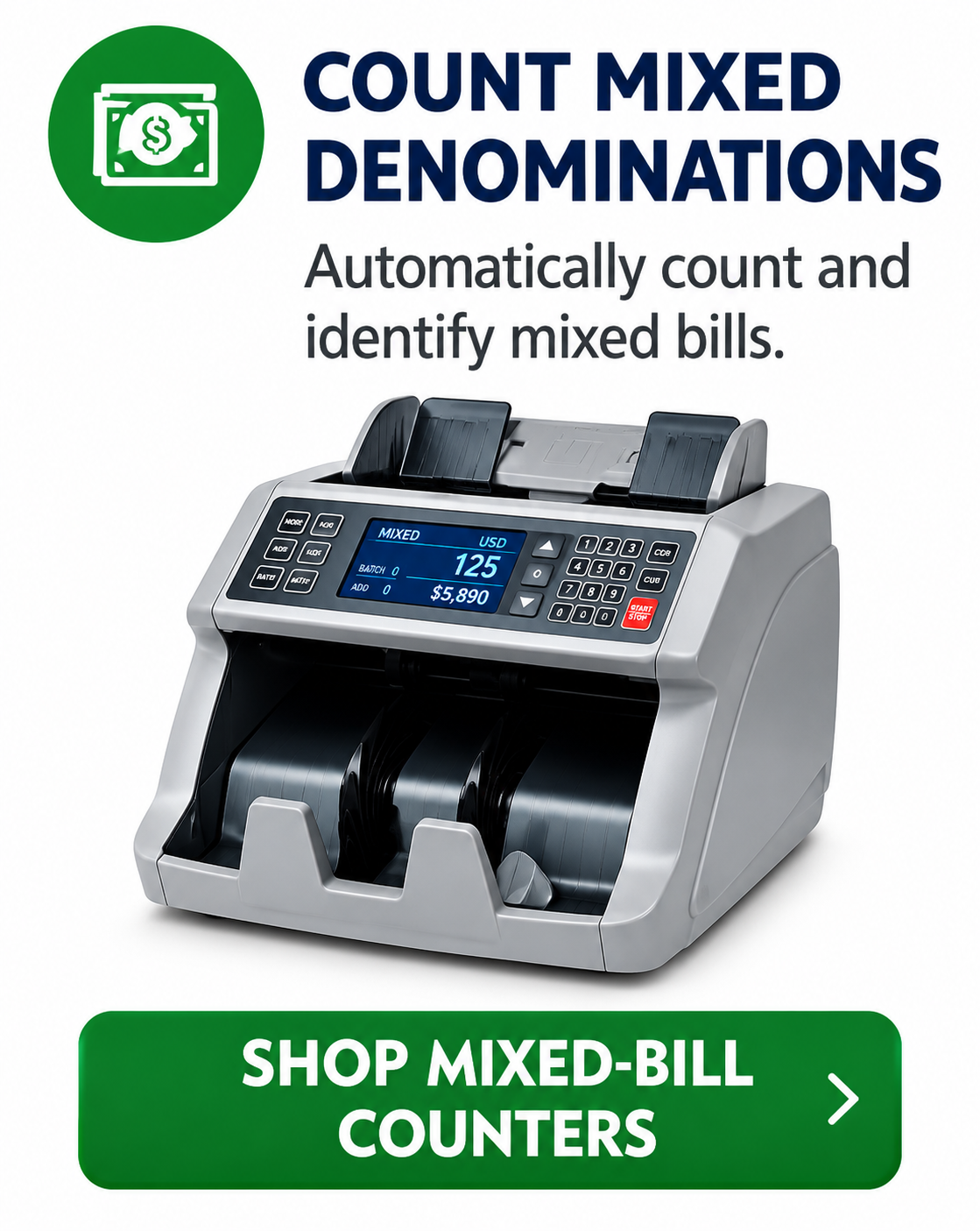
Mixed Denominations or Multi-Currency Operations
Businesses handling multiple denominations require a Value Counter or Currency Discriminator. These machines read the note image to automatically detect denominations—critical for bank tellers, gaming floors, and exchange services.
2. Prioritize Security: Multi-Layer Counterfeit Detection
Investing in strong counterfeit detection protects your business from fraud. Effective machines typically include:
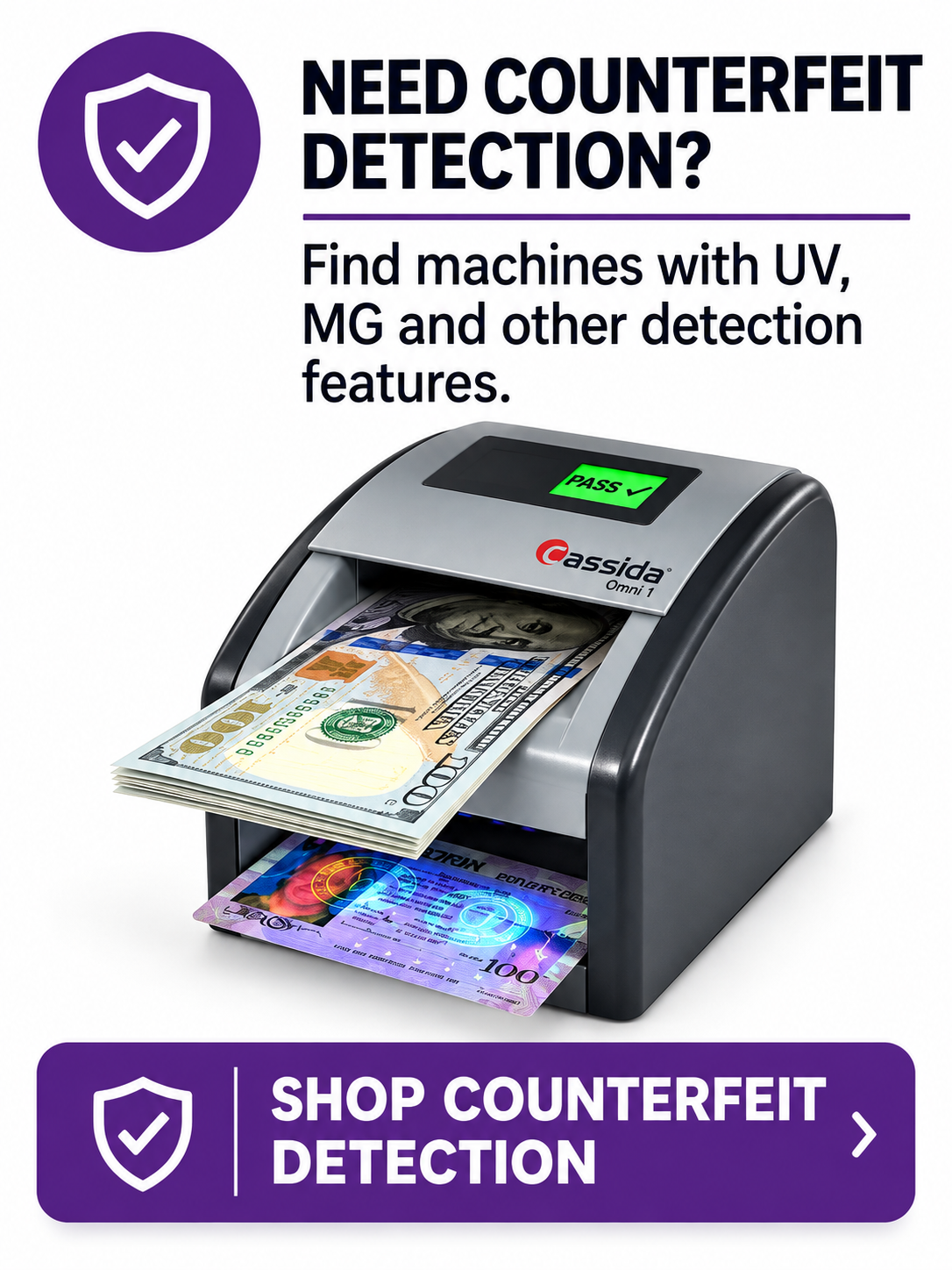
- UV (Ultraviolet): Detects fluorescent threads and security markings.
-
MG/MT (Magnetic Ink/Thread): Verifies magnetic signatures found in genuine bills.
-
IR (Infrared): Confirms infrared-specific patterns used in modern banknotes.
-
CIS (Contact Image Sensor): Provides high-resolution scanning for denomination recognition, serial number capture, and bank-grade counterfeit detection—standard on advanced value counters.
3. Evaluate Advanced Features That Improve Efficiency
Not all counters are created equal. Select features that align with your workflow:
-
Single vs. Dual Pocket:
Dual-pocket (1+1) machines allow continuous counting by diverting rejected or suspicious notes, maximizing efficiency in busy environments. -
User Interface:
A large TFT touchscreen offers faster navigation, easier mode selection, and reduces training time. -
Connectivity:
Options like USB, RS232, LAN, or printer connectivity ensure smooth integration with audit systems, reporting software, or external displays.
4. Consider Long-Term Costs & Maintenance
Reliable machines save money over time. Look for:
-
Commercial-grade durability with at least a 1-year warranty
-
Easy-open designs for simple cleaning and jam removal
-
Regular, free software updates to support new banknote releases
Choosing wisely ensures accuracy, security, and years of dependable performance.

Tel: 818-548-7870 Email: Sales@acebminc.com
10276 Foothill Blvd. Lake View Terrace, CA 91342
Privacy Policy - Return Policy - Service Help
